A Crash Course in Internet & Society: Technologies of Solidarity – Evening III: OPEN.FOOD.TECH
📅 13 December 2026, 19:00–22:00
📍 V2_Groundfloor, V2_Lab for the Unstable Media
📅 13 December 2026, 19:00–22:00
📍 V2_Groundfloor, V2_Lab for the Unstable Media
OPEN.FOOD.TECH: An Adversarial Food Design Dinner
The food system has been hacked. But by whom? Has emerging technology made our food system more open, ethical, and user-centered? We see: ghost kitchens, lab-grown meat and corporate control over biotechnology. What might we gain by trading efficiency and speed for slowness, resilience, and solidarity?
One antidote to the isolating impacts of filter bubbles and AI-slop is conviviality: getting together with friends, technology, and food, and figuring things out. Let’s build new alliances between hackers and foodies.
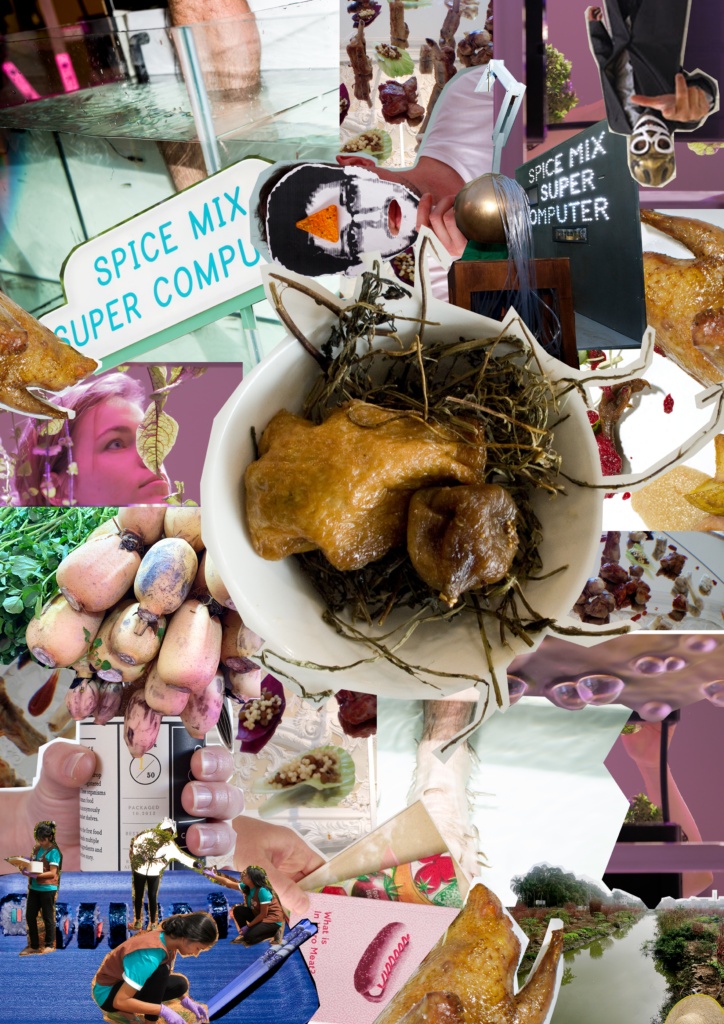
Join the art collective Genomic Gastronomy for a participatory, multi-course dinner where we cook, taste, and prototype alternative food futures together. We will transform unusual and everyday ingredients into meals and create customized recipes, menus and zines to take home.
On the menu: Doritos4Snowden, Terroir That Travels, Food Security Through Obscurity, and a chance to take a position on Minimum Viable Proteins.
No cooking or technical experience required. Just bring your appetite, a single vegetable for a collaborative soup and your curiosity about an open.food.tech future.
The Center for Genomic Gastronomy is an artist-led think tank launched in 2010 that examines the biotechnologies and biodiversity of human food systems. Their mission is to:
– map food controversies
– prototype alternative culinary futures
– imagine a more just, biodiverse & beautiful food system.
The Center has collaborated with scientists, chefs, hackers and farmers in Europe, Asian and North America. They present their research about the organisms and environments manipulated by human food cultures in the form of recipes, meals, publications and exhibitions. Their work has been published in Science, Nature, Gastronomica and We Make Money Not Art and has been exhibited at the World Health Organization, Kew Gardens, Science Gallery Dublin, V2_, MU and the V&A Museum.
The Center consists of Cathrine Kramer, Zack Denfeld and Emma Conley. Their current research initiatives include EXTREME SALAD WORLD: a biodiversity-maximizing garden in Amstel Park & TERROIR THAT TRAVELS: digital maps and agroecological stories that ask how specialty food products and taste-of-place will migrate due to climate change.
OPEN.FOOD.TECH: An Adversarial Food Design Dinner is part of the Crash Course in Internet & Society: Technologies of Solidarity that looks at how we can challenge Big Tech and build a more open, ethical, and user-centered internet.